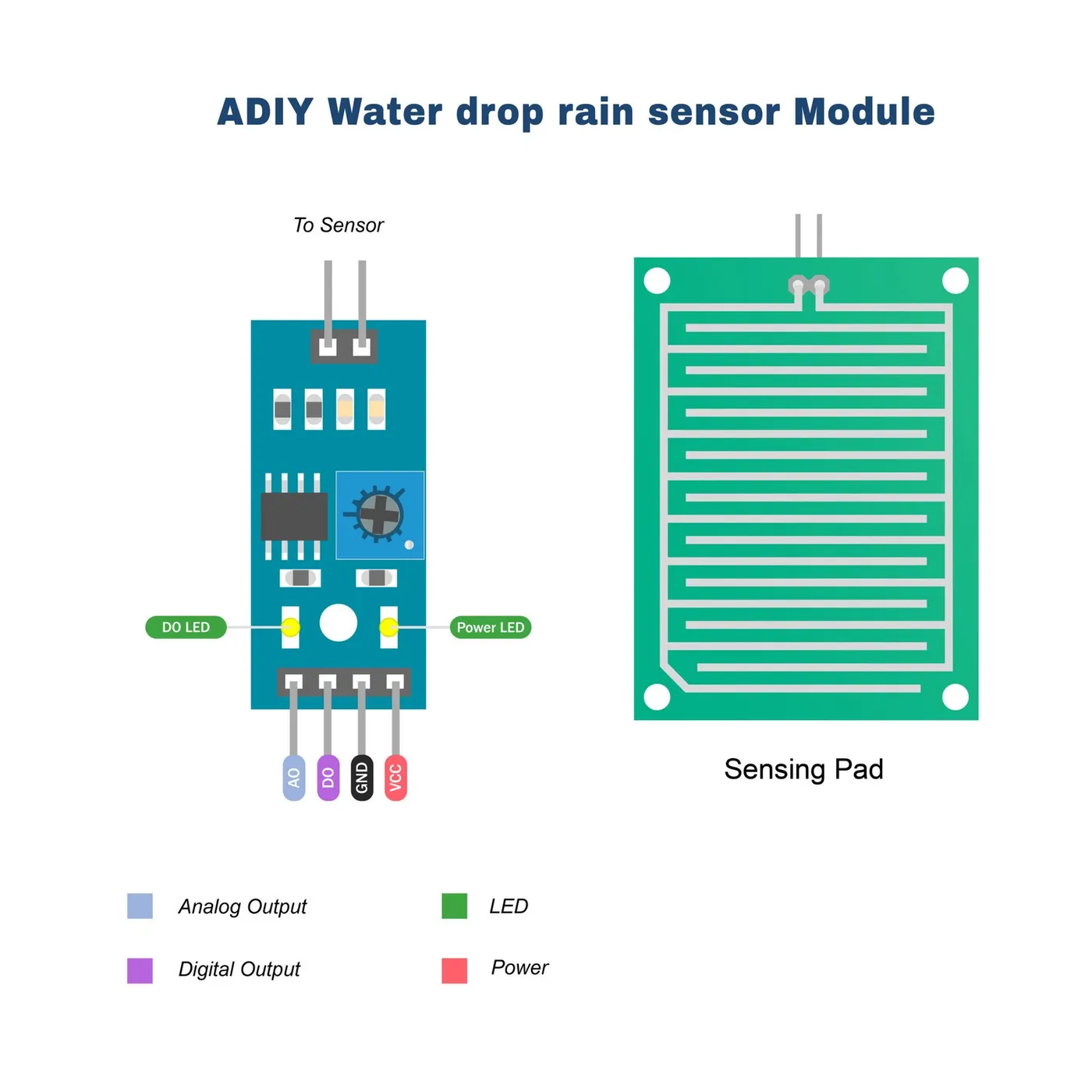
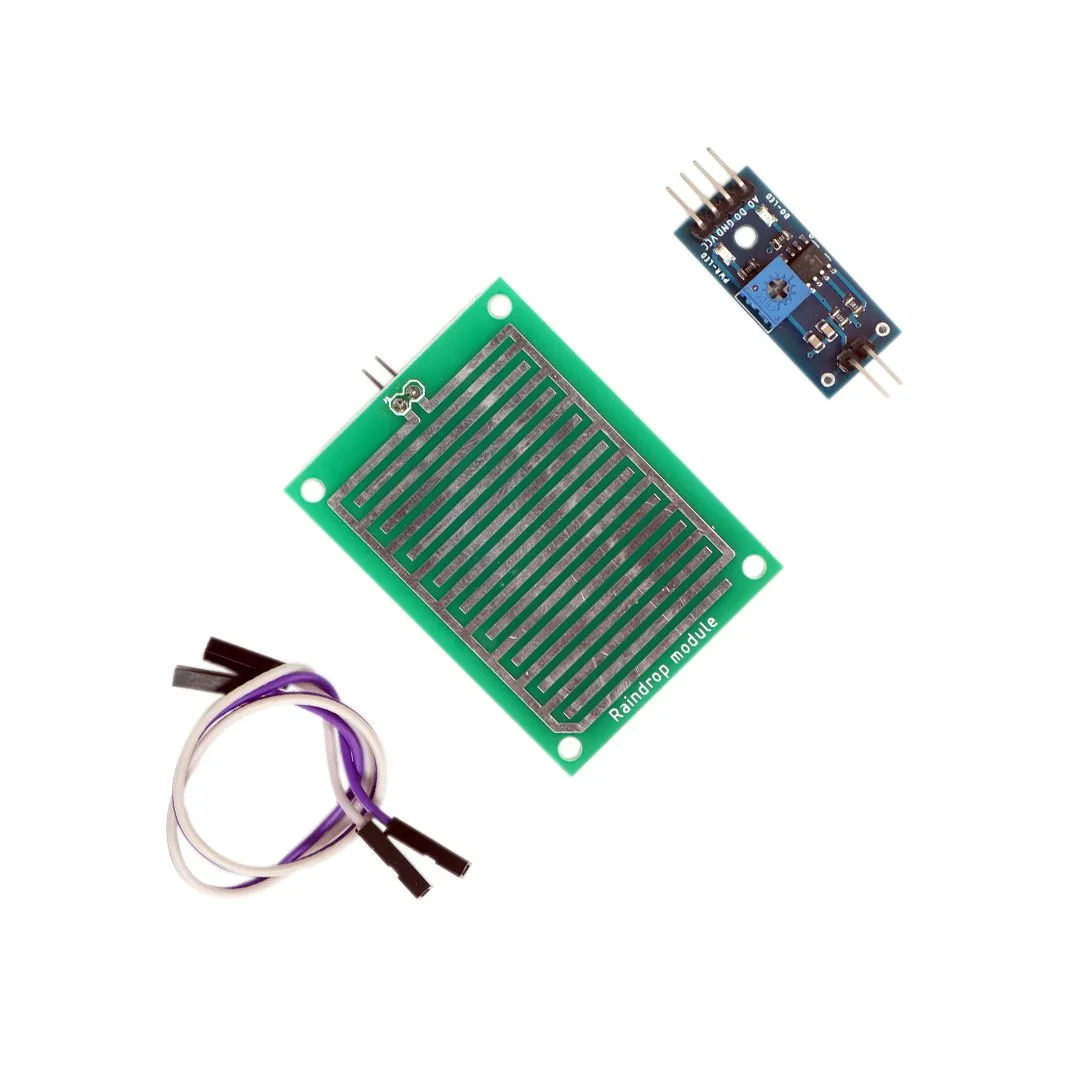
 FIG. 01
Raindrop Detection Sensor Module – ADIY
ADIY Water Drop Rain sensor can be used to monitor rain or slushy snow/hail and send closure requests to electronic shutters, windows, awnings or skylights whenever the rain is detected.The working of the rain sensor is…
₹53₹95incl. GST · price as listed
In stock (as listed)
Overview
ADIY Water Drop Rain sensor can be used to monitor rain or slushy snow/hail and send closure requests to electronic shutters, windows, awnings or skylights whenever the rain is detected.The working of the rain sensor is pretty straightforward. The sensing pad with a series of exposed copper traces together acts as a variable resistor (just like a potentiometer) whose resistance varies according to the amount of water on its surface.
This resistance is inversely proportional to the amount of water:
- More water on the surface means better conductivity and will result in a lower resistance.
- The less water on the surface means poor conductivity and will result in higher resistance.
- The sensor produces an output voltage according to the resistance, which by measuring we can determine whether it’s raining or not.
The rain sensor output can be digitized using our LM393 Comparator module and then fed to any microcontroller such as Arduino.
ADIY Water Drop Rain sensor can be used to monitor rain or slushy snow/hail and send closure requests to electronic shutters, windows, awnings or skylights whenever the rain is detected. The working of the rain sensor is pretty straightforward. The sensing pad with a series of exposed copper traces together acts as a variable resistor (just like a potentiometer) whose resistance varies according to the amount of water on its surface.
This resistance is inversely proportional to the amount of water:
- More water on the surface means better conductivity and will result in a lower resistance.
- The less water on the surface means poor conductivity and will result in higher resistance.
- The sensor produces an output voltage according to the resistance, which by measuring we can determine whether it’s raining or not.
The rain sensor output can be digitized using our LM393 Comparator module and then fed to any microcontroller such as Arduino.
Features & Specifications – Raindrop Detection Sensor Module#
- Simple to use
- Passive component
- Resistive Sensor
Resource
Features
- More water on the surface means better conductivity and will result in a lower resistance.
- The less water on the surface means poor conductivity and will result in higher resistance.
- The sensor produces an output voltage according to the resistance, which by measuring we can determine whether it’s raining or not.
- Simple to use
- Passive component
- Resistive Sensor
- Usage Guide
Pin configuration